Saturday, March 24, 2012

An Ending and an Open Door

"I see the poem or the novel ending with an open door." - Michael Ondaatje

Those who have followed this blog over the years knew that I had stopped it for a while. Of course, as one can tell from the posts in the last few months I’ve tried to start posting to it once again. However, I find that Life simply prevents me from continuing it.

I think it's important to note that just because I'm not writing this blog doesn't mean that it's the end of my activism for Economic Democracy. I will continue to work for Economic Democracy yet by other means.

In addition, it would be the height of hubris of me to think that the ongoing struggle for Economic Democracy will be adversely affected simply because I'm not writing a short bi-weekly blog that a few people read. As the character Victor Laszlo in the movie Casablanca said concerning if he and all of the other leaders the Resistance were killed, "… hundreds, thousands would rise up to take our places."

Others will take my place and the struggle will continue without this blog.

According Ondaatje an ending is an open door. I ask my readers to use this open door as a motivation to continue the struggle for a just society.

Saturday, March 3, 2012

Big Oil Continues to Make Big Bucks

Big Oil continues to screw us and take in big profits while paying lower tax rates than most US taxpayers. According to Think Progress.Org in 2011 ExxonMobil saw a 35% jump in profits compared to 2010. This meant they raked in $41.1 billion in 2011. Oh, but this isn’t all. Rebecca Leber compiled an interesting list of facts ExxonMobil:

• Exxon’s $41.1 billion in 2011 profit translates into nearly $5 million in profit every hour, or more than $1,300 every second. The annual profit comes near the record revenues of $46.23 billion in 2008.

• Stock buybacks for Q4 were $5.4 billion, and $ 21.60 billion for the year, equivalent to 53 percent of total 2011 profit. This enriches executives, the board of directors, and largest shareholders.

• Exxon pays a lower tax rate than the average American. Between 2008-2010, Exxon Mobil registered an average 17.6 percent federal effective corporate tax rate, while the average American paid a higher rate of 20.4 percent. [In 2010, Mitt Romney paid an effective tax rate of 13.9%.]

• The company paid no taxes to the U.S. federal government in 2009, despite 45.2 billion record profits. It paid $15 billion in taxes, but none in federal income tax.

• The oil giant uses offshore subsidiaries in the Caribbean to avoid paying taxes in the United States.

• Exxon is sitting on $11 billion cash on hand as of September 30.

• Exxon spent nearly $13 million on lobbying expenditures in 2011. The company gave nearly another $900,000 in federal campaign contributions. 92 percent of contributions went to Republicans.

• Exxon CEO Rex Tillerson made $29 million in 2010 (according to the latest records): He made $2.2 million in salary, a $3.4 million bonus, and stock awards valued at $15.5 million.

• Exxon is drawing out a legal battle for damages on a spill from 22 years ago. Exxon hasn’t paid $92 million in cleanup for the devastating Valdez Alaskan oil spill. In its Sept. 30 court filing, Exxon argued the damages it agreed to pay only covers “restoration” and not additional “clean-up.”

• Far from a job creator, ExxonMobil — together with Chevron, Shell, and BP — reduced their U.S. workforce by 11,200 employees between 2005 and 2010.

How long will it be before Americans wake up and smell the gasoline? How long will it be before people realize how corporations are screwing us?

Monday, February 13, 2012

Profiting from Disease

Sometimes I think there’s nothing that corporations could do that would still shock me. Then I’m proven wrong.

According to the NBC Nightly News (“Capitalizing on drug shortages, companies turn profit” broadcast October 17, 2011) there’s a shortage of certain drugs. While there are several legitimate reasons for these shortages, NBC reported that an investigation by Congress found that one disturbing reason was that some companies are buying up a wide range of drugs used for the treatment of cancer and other serious diseases then turning around and selling them at unbelievable high prices. For example, according to the report one company sold a vial of leukemia medicine that would normally sell for $12 for an amazing $990 a vial!

There’s a point where as system as corrupt as Capitalism can go so extreme that it even offends Big Media such as NBC. This is one of them.

Sunday, January 22, 2012

The Truth About Adam Smith

It’s amazing how often Capitalists love to quote Adam Smith, the author of the book Wealth of Nations, which one might call the Capitalist Bible. Well, maybe I should rephrase that. I really should write that it’s amazing how Capitalists love to pick and choose quotes from Adam Smith but fail to mention views that he held that they disagree with.


Capitalists love to refer to Adam Smith’s “invisible hand” when it comes to the power of the market. I have no problem with that habit being that the market would still be an important part of an Economic Democracy. Very simply put, Smith was indeed right that what we today call natural selection when applied to the market can indeed make for a better product or service.

However, he made many statements in the Wealth of Nations that Capitalists and their defenders fail to mention.

Progressive Taxation
"It is not very unreasonable that the rich should contribute to the public expense, not only in proportion to their revenue, but something more than in that proportion."

Smith also wrote:
"The subjects of every state ought to contribute towards the support of the government, as nearly as possible, in proportion to their respective abilities, that is, in proportion to the revenue which they respectively enjoy under the protection of the state."

These two statements are especially timely. Right now on Capitol Hill, one of the biggest arguments is whether the tax rates for the rich should be raised. It’s obvious that Adam Smith supported a progressive tax on the wealthy.

Poverty
"No society can surely be flourishing and happy, of which the greater part of the members are poor and miserable. It is but equity, besides, that they who feed, cloath and lodge the whole body of the people, should have such a share of the produce of their own labour as to be themselves tolerably well fed, cloathed and lodged."

Another hot topic right now is the fact that there has been such a growth in the disparity in incomes between the very rich and, well, everyone else. A small percentage of the wealthy American population has gained dramatically while the rest of the nation has seen dramatic drops in wealth.

Fair Wages v Profits
"Our merchants and master-manufacturers complain much of the bad effects of high wages in raising the price, and thereby lessening the sale of their goods both at home and abroad. They say nothing concerning the bad effects of high profits. They are silent with regard to the pernicious effects of their own gains. They complain only of those of other people."

It's amazing how Capitalists fail to mention this statement. Smith is saying clearly that workers deserve a fair wage and actually refers to "the bad effects of high profits" and "the pernicious effects of their own gains."

Trade Associations
"People of the same trade seldom meet together, even for merriment and diversion, but the conversation ends in a conspiracy against the public, or in some contrivance to raise prices. It is impossible indeed to prevent such meetings, by any law which either could be executed, or would be consistent with liberty or justice. But though the law cannot hinder people of the same trade from sometimes assembling together, it ought to do nothing to facilitate such assemblies; much less to render them necessary."

I wonder how many business trade associations would admit that they meet "in a conspiracy against the public?"

Labor Protection Laws
"Whenever the legislature attempts to regulate the differences between masters and their workmen, its counselors are always the masters. When the regulation, therefore, is in favor of the workmen, it is always just and equitable; but it is sometimes otherwise when in favor of the masters."

There’s a statement here that deserves repeating, "When the regulation, therefore, is in favor of the workmen, it is always just and equitable; but it is sometimes otherwise when in favor of the masters." Such regulation in favor of labor "is always just and equitable" but is sometime not when "in favor of the masters." The reader needs to remember that at the time the word master was used for the sole-proprietor or what we today would say boss.

Redistribution of Wealth
"All for ourselves, and nothing for other people, seems, in every age of the world, to have been the vile maxim of the masters of mankind."

For Capitalists the term "redistribution of wealth" is a filthy phrase. However, here we find Smith saying the opposition of such redistribution is a "vile maxim."

Worship of the Wealthy
"This disposition to admire, and almost to worship, the rich and powerful, and to despise, or, at least neglect persons of poor and mean conditions, though necessary both to establish and to maintain the distinction of ranks and the order of society, is, at the same time, the great and most universal cause of the corruption of our moral sentiments."

We all know the obsession many have with the 'Lives of the Rich and Famous.' Smith found such obsessions "the great and most universal cause of the corruption of our moral sentiments."

Looking Out for Number One
"How selfish so ever man may be supposed, there are evidently some principles in his nature, which interest him in the fortune of others, and render their happiness necessary to him, though he derives nothing from it except the pleasure of seeing it."

Even though much of Smith's writings seem harsh he couldn’t help but accept that it was in our nature to care for our neighbors. Even he admitted that altruism was part of human nature.

Corporations
"The directors of such companies, however, being the managers rather of other people’s money than of their own, it cannot well be expected, that they should watch over it with the same anxious vigilance with which the partners in a private copartnery frequently watch over their own.... Negligence and profusion, therefore, must always prevail, more or less, in the management of the affairs of such a company."

Capitalists have many ways of trying to explain away this statement. Some say he's only referring to sovereign entities that were created by the Crown and had been granted exclusive monopolies, such as the British East India Company. However, the establishment by the State of a company with a monopoly of the system doesn’t appear in his wording. His criticism is that the managers are watching over "other people's money than of their own." Another defense is that modern corporations have accountability systems set-up to compensate for this, which didn’t exist in Smith’s time. The problem with this argument is that recent history has shown this to be false. Companies such as Enron, Arthur Anderson and Countrywide Financial are just a few examples.

Conclusion
I’m not saying Smith was always right. Nor am I saying that if alive today he would be an advocate of Economic Democracy. However, I do want to bring some balance to the discussion on his work.

Sunday, January 15, 2012

The Return of Bill Moyers

Something I find exciting is that Bill Moyers has decided to return to the media with a new show on PBS "Bill Moyers and Company." Moyers has been a voice of reason and common sense for years and his return here in 2012 is a fantastic development.


We got a glimpse of what to expect from his show's premiere episode, on January 15, 2012, "On Winner Take All Transcript." At the end of the show, Moyers gave a fantastic commentary in response to an interview to someone who said the country was waking up:

Waking up is right. Waking up to the reality that inequality matters. It matters because what we’re talking about is what it takes to live a decent life. If you get sick without health coverage, inequality matters. If you're the only breadwinner and out of work, inequality matters. If your local public library closes down and you can't afford to buy books on your own, inequality matters. If budget cuts mean your child has to pay to play on the school basketball team or to sing in the chorus or march in the band, inequality matters. If you lose your job as you’re about to retire, inequality matters. And if the financial system collapses and knocks the props from beneath your pension, inequality matters.

I grew up in a working class family. We were among the poorest in town, but I was rich in public goods.

I went to a good public school, played sandlot ball in a good public park, had access to a good public library, drove down a good public highway to a good public college, all made possible by people I never met. There was an unwritten bargain among the generations -- we didn’t all get the same deal, but we did get civilization.

That bargain’s being shredded. The occupiers of Wall Street understand this. You could tell from their slogans. A fellow young enough to be my grandson wore a t-shirt emblazoned with the words: "The system's not broken. It’s fixed." That's right. Rigged. And that's why so many are so angry. Not at wealth itself, but at the crony capitalists who resorts to tricks, loopholes, and hard, cold cash for politicians to make sure insiders prosper and then pull up the ladder behind them.

Yes, Americans are waking up. To how they're being made to pay for Wall Street’s malfeasance and Washington's complicity. Paying with stagnant wages and lost jobs, with slashing cuts to their benefits and to their social services. And waking up to the grotesque Supreme Court decision defining a corporation as a person, although it doesn't eat, breath, make love or sing, or take care of children and aging parents. Waking up to how campaign contributions corrupt our elections; to the fact that if speech is money, no money means no speech.

So the collective cry has gone up loud and clear: enough’s enough. We won't, as I said, know for a while if this is just a momentary cry of pain; or whether it’s a movement that, like the Abolitionists and Suffragettes, the populists and workers of another era, or the Civil Rights movement of our time, gathers force until the powers-that-be can no longer sustain the inequality, the injustice and yes, the immorality of winner-take-all politics.

You can watch the entire episode online at Bill Moyers and Company web site along with other great web articles.

Welcome back, Mr. Moyers!

Sunday, January 1, 2012

International Year of Cooperatives

New Year’s Day usually brings hopes of good times to come. On a personal level, we make resolutions with promises of changes we plan to improve ourselves. We also can’t help but wonder what might 2012 bring to society as a whole.

In October of last year, the United Nations declared 2012 to be "The International Year of Cooperatives."

The President of the General Assembly Nassir Abdulaziz Al-Nasser correctly explained, "By virtue of their organizational characteristics, cooperative enterprises are user-owned and community responsive. They continue to aggregate economic power enabling communities to compete successfully in the global economy."

Deputy Secretary-General Asha-Rose Migiro also stated, "As self-help organizations, cooperatives are inherently people-centered. They not only meet material needs, but also the human need to participate proactively in improving one's life. Moreover, with democratic decision-making processes and a focus on cultivating member skills and capacities, cooperatives offer a model for harnessing the energies and passions of all."

Has the UN given us a preview of what 2012 might bring?

Saturday, December 17, 2011

Halleluiah Corporation

In the spirit of the season I think we need a little musical number for this blog entry. Therefore, I give you "Halleluiah Corporations" performed by Stanza XXI.


Happy Holidays!

Sunday, December 4, 2011

Wal-Mart: Save Money. Screw Employees

Wal-Mart is at it again. According to the Associated Press Wal-Mart is slashing its health care coverage for part-time employees and jacking up its premiums for its full-time employees.

Of course, Wal-Mart isn’t alone in screwing its employees. AP reported that according to the insurance company Kaiser only 42% of companies offer health care coverage to their part-time workers. It’s even worse if the employee is in retail because according to Mercer only 28% of those companies offer health care coverage.

Health care is a universal human right. It’s that simple.

Sunday, November 20, 2011

Black Friday Backlash

According to the New York Times there’s a growing backlash against Black Friday by consumers. Some say it’s an extension of the Occupy Wall Street sentiment. Others say they don’t like that the Black Friday openings are pushing further and further into Thanksgiving. One interesting motivation for some is an acknowledgement of the strain it places on the Workers, which might indicate a growing Worker identity in America.

Whatever the reason for the backlash, the fact that some people are standing up and declaring that they’re not going to take it anymore is a great thing. It gives one hope.

Saturday, November 5, 2011

The Beginning and the End

"You tell me that it's evolution
Well, you know
We all want to change the world
But when you talk about destruction
Don't you know that you can count me out"
~ Revolution by the Beatles


Over the last few weeks events in Oakland took a violent turn as a minority of people rioted after an Occupy Oakland protest. Even the police agreed that the rioters were not part of the Occupy Oakland group but a group of outsiders. In fact, the next day the true members of Occupy Oakland came out to help clean up. But with events such as this I thought it was important for me to state emphatically where I stand.

My position can be best summed up by the words of Martin Luther King Jr. back in December 11, 1964 "Nonviolence is the answer to the crucial political and moral questions of our time; the need for mankind to overcome oppression and violence without resorting to oppression and violence. Mankind must evolve for all human conflict a method which rejects revenge, aggression, and retaliation. The foundation of such a method is love."

If we truly want change we have to become part of the political process. By becoming part of the process we can change the world in a peaceful and orderly manner from the current one of injustice to a world built on justice. To quote Adlai E Stevenson, "As citizens of this democracy, you are the rulers and the ruled, the law-givers and the law-abiding, the beginning and the end."

Become organized, get involved, and most importantly: vote. Those are the keys to change.

Saturday, October 22, 2011

Occupy Wall Street

It's been over a year ago that I stopped posting here and my return took longer than I expected. However, with recent events in the news I felt like I couldn't wait any longer.

What a field-day for the heat
A thousand people in the street
Singing songs and carrying signs
Mostly say, hooray for our side
It's time we stop, hey, what's that sound
Everybody look what's going down

~ Buffalo Springfield, “For What It's Worth”

You can’t miss them because they’re all over the news media. In major cities across the world groups of people, some groups are small while others are large, setting up camps under the banner of Occupy Wall Street. There are no obvious leaders of this movement. Certainly, the Canadian based magazine Adbusters deserves some credit for helping to provide the spark but the magazine has pulled back and the movement has grown and taking a life of its own. PBS Newshour provided a very good report on the movement.

Most criticisms of Occupy Wall Street have simply been nonsense. Contrary to what critics say, while comments by a few protestors have been rather unrealistic, the majority of the protestors appear unified with three primary complaints: wide-scale corporate greed, excessive unemployment and underemployment, and the power of the top 1% wealthiest of the population over our political and economic system.

However, while their complaints are valid there has been one criticism by commentators that I think has merit. Most protestors have failed to provide practical proposals on how to fix these social injustices. When injustices exist, then it’s good and right to complain but it’s meaningless if real world solutions aren’t proposed.

This is not to say there haven’t been any proposals. In an article on MSN Money “What if we took down Wall Street?”, Anthony Mirhaydari wrote, “One thing the occupiers on Wall Street seem to imagine is a return to a small, community-based lending model -- with mortgages and small-business loans owed to the bank down the street…” While this is a good start, it’s not complete enough. Any socio-economic model big enough to successfully replace Capitalism requires something more than just mom and pop shop lenders.

What the Occupy Wall Street movement needs is to demand replacing Capitalism with an Economic Democracy, which would incorporate these proposed small, local lenders as part of a bigger and more robust model that would actually work.

Those that have followed my blog in the past are knowledgeable of Economic Democracy. For my new readers this is a good time to review what that means.
  • An Economic Democracy would be a market economy,
  • The core economic unit would be based on autonomous, democratically governed, worker-owned cooperatives,
  • In addition, there would be an increase in the number of family-owned enterprises and sole-proprietorships in comparison to the current capitalist system,
  • Both types of enterprises would be networked together by economic councils that would allow for mutual aid and input from the community,
  • There would also be the existence of non-profit and community-owned enterprises for services that cannot be provided by either co-ops or sole-proprietorships,
  • Investment would be provided by a mix of public sources in the form of governmental bodies and non-profit NGO’s rather than private capital, and
  • There would be extensive support to individuals and the various enterprises by local, state, and federal governments, such as universal health care and free education from pre-school through college.
Here’s my message to the Occupy Wall Street participants. You have two choices. While you have the right to protest, are you going to do nothing but continue camping out, carrying around signs and complaining? Or will you turn your anger into something productive by entering into the political process and electing representatives who will pass legislation that will actually make a difference?

The choice is yours.

Saturday, October 2, 2010

An Important Announcement

I began writing this blog back in October of 2007, making this month the third anniversary of my first entry. Upon this anniversary I've decided to take an approximately three month sabbatical from this blog until the end of 2010.

Over the last year I’ve developed a serious medical condition, which requires that I reorganize my life. I don't make this decision lightly, for I'm still a strong advocate for the cause, but I've decided that a temporary leave from writing this blog is best.

To my loyal readers over the years I want to say thank you for following my blog. I hope my writings have been helpful to the cause of creating a more just society.

If Providence allows, I expect to start posting to this blog again in January of 2011. There's other possible venues to advocate for the cause that I might use other than returning to this particular blog come the new year. I will decide over the next three months what path I take.

Until then I leave you with the words of W. E. B. Du Bois, “Believe in life! Always human beings will live and progress to greater, broader and fuller life.”
Pax,
Larry

Sunday, September 19, 2010

Who We Are: Conclusion

Paleontology
This is the final installment in a series of postings in which I explore the growing mountain of scientific evidence that supports that human have, as a species, a cooperative nature.


Olivia Judson in an article titled "How Heroes Are Made" (USA News and World Report Special Edition: Mysteries of Science) explained that in nature benefit and costs are determined by one standard and one standard alone, which is the number of offspring that an organism has. The more children an organism has then the more successful that organism is. This standard poses a problem for those of us who claim that humans have a cooperative nature. It would seem that if we cooperate then we run the risk of helping others pass along their genes at the expense of ours. Altruism and cooperation would seem to contradict natural selection. If mutual cooperation is indeed what separated us from the other primates what might have been the evolutionary pressure that could have created a cooperative and altruistic ape?

The famed evolutionary biologist and game theory pioneer William Douglas Hamilton published several studies on what might cause altruism to evolve in the species. According to Hamilton a gene that promoted extreme altruism, which is a form of altruism that is so sacrificial that the organism leaves no descendants, could spread if it helped individuals who were closely related. Hamilton created a formula to predict whether an organism had a predisposition to altruism. Known as Hamilton’s Rule if the action’s benefit is large enough and if there is a close enough genetic relationship so as to outweigh the cost then the altruistic gene would be promoted.

One can expand this principle of "kin selection" beyond the immediate family. Many species live in large groups such as herds and flocks in which they interbreed. For example, the Common Chimpanzees mentioned in my last blog while intolerant aren’t loners but live in large communities with layers of sub-communities. While the females leave during adolescence the males stay and form gangs which roam across their territories guarding it from interlopers. These males can set up friendships across family lines and prefer to set up gangs with their maternal brothers and half brothers. If they run across a gang from another community there can be violence to the point that some smaller communities may be wiped out.

According to Judson in the 19th century Charles Darwin hypothesized that early humans warring in same fashion as the chimps might actually have created altruism. Darwin hypothesized that unified groups of caring early humans might have been more successful in competition with the rugged individualist humans. Over time the rugged individualists and non-cooperative humans were put under such evolutionary pressure that they were replaced by cooperative humans.

Darwin’s hypothesis is intriguing but is there any evidence to support it? In a paper published in the journal Nature, Judson reported that it was found that people tend to prefer to help strangers from their own ethnic group. Such studies as the one in Nature, along with others, have increased interest in Darwin’s idea. But some of the strongest evidence may have been found by the evolutionary biologist Sam Bowles. According to Bowles during the last 90,000 years of the Pleistocene era, which lasted from 100,000 to the 10,000 years ago, there was little growth in the numbers of humans. Certainly climatic volatility during this time was rather extreme and that could have kept numbers down. But Bowles reviewed the archeological records and various studies and estimated that a substantial numbers of the deaths could have resulted from wars. According Judson, "Bowles shows that supercooperative, altruistic humans could indeed have wiped out groups of less united folk." Judson wrote that for this to be a success the model would also require supportive groups based on monogamy, sharing of food, and little disparity between members. It’s interesting to note that Judson states that if Bowles was right then any group that failed to drive out or kill disruptive or non-cooperative members would have had a disadvantage in battles.

With these studies are taken together, along with many others that I haven’t covered, it turns out that natural selection can indeed lead to the development of an altruistic and cooperative ape.

Conclusion of Series
In conclusion, what can we draw from these studies reviewed over the past months? We are hardwired by millions of years of evolution to make cooperative behavior intrinsically reinforcing. Because of these studies we can now see that the very heart of capitalism, the idea of the rugged individual and looking out for Number One, is a myth. Economic democracy is built upon the reality of the cooperative nature of humans. It’s time for society to move beyond the unnatural system of capitalism and move on to its logical successor: economic democracy.

Saturday, September 4, 2010

Who We Are: Part III

Animal Studies

This is the third installment in a series of postings in which I explore the growing mountain of scientific evidence that supports that human have, as a species, a cooperative nature.


Brian Hare, researcher for the Max Planck Institute for Evolutionary Anthropology, has been studying cooperative behavior in various animals for years. As a teenager Hare started studying the behavior of dogs in his parent’s basement. In his childhood experiments, which were the first of their kind, he indicated that the dogs were very good at following human non-verbal instructions. Later studies by other researchers supported Hare’s results showing that such attributes are genetically predetermined. Wolves lack this capacity, so the dog's abilities have been artificially selected by humans over the centuries through breeding.

At one point in his career Hare ended up at the Institute for Psychology and Genetics in Akademgorodok, Russia in which the researchers had been studying foxes since 1959. They were selectively breeding the foxes based on their degree of fear exhibited of humans. A control group was allowed to breed as usual while in the experimental group only those less fearful of humans were allowed to breed. Over time the behavior of the foxes in the experimental group changed. Those foxes took on dog like behaviors of barking and wagging their tails in the presence of humans as well as dog like physical appearance such as floppy ears, coats with differing degrees of markings, their skeletons became weaker, and their hormone balance changed. Along with all of this their social intelligence had begun to resemble the dogs in that they developed the ability to intuitively understand the directions of humans.

This trait of co-habitation and tolerance in dogs and the specially bred foxes lead to a hypothesis by Hare. He hypothesized that similar behavioral changes were prerequisites for the evolution of intelligence in humans. In other words, he hypothesized that our intelligence could not have evolved if we had not developed a prior practice of tolerance and the ability to cooperate with each other. He then proceeded to test his tolerance hypothesis. This required studying our closest relatives: the chimpanzees.

The Common Chimpanzees are known to be highly competitive and intolerant. For example, if a chimp of a lower rank attempts to eat from a bowl of food first then the higher ranking chimp will beat him and horde the food. Hare decided to test how far he could push this intolerance and find out what it would take for the chimps to cooperate with each other.

He set up an experiment with a bowl of food that could only be acquired by two chimps pulling on a rope together. If any chimpanzee alone tried to pull the rope it would fail so the only way to succeed would be for at least two chimps to cooperate. Time and time again they tried it individually and failed. But occasionally a few chimps would cooperate and successfully pull the rope together. It turned out that it was those few chimps that had already exhibited tolerance, such as eating together, that would be the ones that would cooperate with each other and would therefore succeed in the exercise.

When Hare studied Bonobos, a sub-species of chimpanzee, he found a very different story. Rather than a few tolerant members working together the bonobos naturally worked together to solve the problem. But true to their nature the bonobos, in a hedonistic style that would have made the free love of the 1960's seem puritanical, they would first have sex and would then cooperate in acquiring the food.

Bonobo Chimpanzees are interesting for many reasons. Being a sub-species of the chimpanzees they share at least a 98% genetic similarity with humans. Plus, their physical appearance is intriguing. The Bonobo have long head hair, pink lips, small ears and wide nostrils. In comparison to the Common Chimpanzee they have long legs, slim upper torso, and human-like breasts that are more prominent.
Hare has hypothesized that the point of separation of our ancestor from the chimps resulted from our ancestors purging the dominating and power hungry members in favor of tolerant and mild temperament members, which contrasts against the now discredited, though still widely accepted in pop culture, “killer-ape” theory. Hare and the other animal researchers have presented evidence that supports that what started our species in becoming human was not due to struggle and violence but mutual aid and cooperation.

In the next entry I will conclude this series with research that supports how natural selection can encourage the rise of a cooperative species.

Sunday, August 22, 2010

Who We Are: Part II

Social Networks and Obesity

This is the second part of a series of postings in which I explore the growing mountain of scientific evidence that supports that human have, as a species, a cooperative nature.


In July of 2007 the New England Journal of Medicine released a study that had followed 12,067 people in the Massachusetts town of Framingham over a fifty year period of time. What they found was astounding. According to the Dallas Morning News, the study "was the first to demonstrate that obesity – and perhaps other health problems that involve behavior or lifestyle – spreads through social networks."

To show how effective social networks are in affecting weight it was found that the chances of becoming obese went up 57% if a friend became obese, 40% if a sibling’s changed, and 37% if the person was a spouse. The most outstanding chance of change was if a close friend’s weight changed. If so then the chances that a person would become obese went up an amazing 171%!

In the study they were able to rule out several factors. First, they found that there was no statistical significance for socioeconomic class or access to healthy food. It turned out that there was a closer connection between friends that lived hundreds of miles away than there were between next door neighbors. In addition, they were able to rule out "birds of a feather" or that obese people were attracted to similarly obese by excluding those friends who were both obese at the start.

So what was taking place? According to a co-author of the study, Nicholas Christakis with the Harvard Medical School, "What we think is going on here is emulation." The behavior of emulation is certainly one trait expected to be found within a cooperative species.

In the third part of this series I’ll explore some of the animal studies and how they support the evolution of a cooperative human species.

Sunday, August 8, 2010

Who We Are: Part I

Longevity, Cooperativism and Human Nature


Philosophers have historically taken the three highly simplified views of human nature and have built various models consisting of differing degrees of complexity. Jean Jacques Rousseau believed that we are by nature good and that we are corrupted by society (the “noble savage”). The existentialist philosopher Jean-Paul Sartre held that human nature is neutral, with an individual’s free will being the sole element that decides our actions. According to Sartre as humans we have a radical freedom to the point that we are “condemned to be free.” Others that share his view of neutrality often give control largely to environmental socialization and conditioning (such as B.F. Skinner). Then there was Thomas Hobbes who held that human nature is bad. In Leviathan Hobbes wrote, “So that in the first place, I put for a general inclination of all mankind, a perpetual and restless desire of power after power, that ceaseth only in death.” He thought that any goodness exhibited by someone was the result of society keeping that person’s dark side in check. Otherwise, without society’s restrictions, human existence would be “nasty, short, and brutish.”

There is a growing body of scientific studies that now point towards an understanding that humans have a hardwired predisposition in which working together appears to be intrinsically reinforcing and which in turn encourages future cooperative behavior. Studies show that this drive is so powerful that if someone fails to cooperate then another person will go out of his or her own way to punish the uncooperative one, even at his or her own sacrifice. This revelation of the cooperative nature of humankind is so important that it deserves close examination.

A recent study by Brigham Young, published in the Public Library of Science, found that having social relations can actually increase one’s longevity. They took the results of 148 studies involving 138,000 people and combined them. What they found was a clear statistical trend that indicates that having strong social relations could increase a person’s lifespan in comparison by as much as four years.

What we see in this study is natural selection at work in the evolution of early humans. Those early humans who were by nature cooperative lived longer and therefore had more babies than their less cooperative peers. Over time the cooperative members of our human ancestors became dominant in the species and the “rugged isolationists” became a rarity.

In the next installment I will look at another study which involves social networking that found further support for cooperativism being hardwired within our nature

Friday, July 23, 2010

The Silver Screen

After a depressing post such as the last one, which addressed the ongoing disaster on the gulf, I felt that it was time for something positive. Surprisingly, it was handed to me all wrapped up like a Christmas gift by the corporate news media.

On July 20th of this year NBC Nightly News ran during their feel good feature, "Making A Difference," a segment about community-owned theaters in 19 small towns across North Dakota. The report centered on theaters in the towns of Rockford and Langdon.

These theaters are perfect examples of how community-ownership could function in an economic democracy. The towns identified a need of the larger community (in this case the continued existence of movie theaters in the old city downtown areas that help to preserve the traditions and heritage of the community) in which the market, even if the economic enterprises were cooperatively owned and managed, wouldn't work. As a result the towns have converted the dead or dying historic privately-owned movie theaters into community-owned, non-profit theaters. In the news report at the Rockford Theater one volunteer stated, "Nobody is in here to make a profit, we're in here to keep the theater open." There was a community need and the towns took action to solve it when the market was incapable of doing so.

I've embedded the video of the news broadcast into the blog. Go ahead and watch it. It just might remind you that there is still hope.

Visit msnbc.com for breaking news, world news, and news about the economy

Saturday, July 10, 2010

BP

"I’m shocked, shocked to find gambling going on in here." Captain Renault, Casablanca

In my last posting I mentioned that Marx used a building’s structure as an analogy of the functional relations of society but that a new model was needed. My recommendation was to use genetics instead.

To recap we could think of DNA as being representative of the economic relationships within society. Just as DNA shapes and decides the functions of the organism the economic systems shapes and establishes the functions of the various social structures. In turn, while an organism protects and strives to pass on its DNA, social institutions work to protect and promote their economic systems. Organisms and social systems are both generally stable and adaptable for long periods of times but there is hope because history shows that just as organisms evolve and become extinct to be replaced by new ones the same happens to economic systems.

So now we can better understand some of the events of today. As we watch in horror at the nightmare unfolding in the Gulf of Mexico due to the explosion of Deepwater Horizon, people look for someone to blame. But as it turns out there’s plenty of blame to go around.

People naturally look to blame the corporation BP, which is a logical place to start. BP in its greed for profits, which is endemic in corporate structure, drilled far beyond what technology will safely allow as proven by its inability to cap the flow of oil. Plus, also due to this same greed it cut corners, which helped set the stage for the disastrous explosion.

But others point out that blame goes far beyond BP. It was well known long before the explosion that the Minerals Management Service (MMS), which is the government agency responsible to oversee the oil industry, was in bed Big Oil and was letting them get away with multiple violations while taking gratuities.

In addition to government agencies that are supposed to protect us the legal system has been shown owned by Big Oil. When the Obama administration ordered a six-month moratorium on offshore drilling Judge Martin L.C. Feldman issued a ruling blocking the moratorium because of "irreparable harm" to the businesses in the gulf that depend on drilling activity. But many say that Feldman is owned by the oil industry. As recently as 2008 he owned stock in Big Oil, including Transocean, a company which owns the oil rig Deepwater Horizon.

Like Claude Rains in Casablanca, it’s almost funny watching politicians and commentators exclaim how shocked they are that government officials and judges are bought and paid for by Big Oil. Yet, as the genetics analogy shows it’s in the nature of the system that the various social institutions should support and work to defend the economic system.

Some might point out that it’s different in countries other than the US. They point to other capitalist countries, such as France and Germany that seem to successfully regulate corporations and limit their influence. Does this somehow cause a problem with the analogy? Actually it’s very consistent.

Animal behaviorists have shown that with the right use of conditioned reinforcement one can train an animal in such a manner as to override their natural instincts.


That’s what the Europeans have done. They keep political pressure on their governments so as to override the natural tendencies of their social institutions to obey their capitalist instincts. As one Frenchmen said in Michael Moore’s excellent movie, Sicko, the American people are afraid of their government yet the French government is afraid of its people.

But I believe there is a better way than the European model. Rather than the constant vigilance necessary to keep the beast under control, which could someday turn on its master as it has in here in the US, a better solution would be to replace it with a new economic system. It’s time for the US and the other nations of the world to evolve from Capitalism to an Economic Democracy.

Sunday, June 27, 2010

A New Analogy

Karl Marx used architecture and engineering as an analogy for society. In his analogy a building’s base establishes both the shape of the building as well as the various functions of the building’s superstructure. In turn, Marx wrote, the superstructure functions to provide support and protection to the base. Marx compared human productive relations (i.e. economic system) as being like the building’s base in that they shape society’s legal, social, artistic, religious, political and other cultural features and institutions. In return, according to Marx, these various social features and institutions function to protect and support that same economic system that created them. G.A. Cohen, in his book Karl Marx’s Theory of History, gives an excellent analysis of Marx’s work.

One can understand why Marx might use such an analogy being that he lived during the heart of the industrial age. But maybe it’s time for a new analogy that we can better relate to here in the 21st century. Rather than looking to engineering and architecture it might be best that we look to the cutting edge science and technology of our age: genetics.

As we all know DNA is the blueprint that governs not only the development but the functioning of any living being. It even governs how an organism responds to the operant conditioning of the environment. DNA tells a dog to bark and a cat to meow. But unlike Marx’s architectural analogy, the reciprocal relationship between the organism and its DNA is well established. Not only does DNA shape and govern the organism but an organism strives to protect and pass along its own DNA. Biologists tell us that reproduction is the ultimate goal of any living organism.

Genetics as an analogy has another benefit that Marx’s building analogy didn’t. It provides a mechanism for change. Natural selection guides the evolution of life by putting pressure on organisms. Those that are most fit for their environment are able to have more offspring and therefore they pass along their genes more often than the less fit. While species tend to be stable and adaptable, something shown by Stephen Jay Gould, resulting in the outstanding diversity we see in nature, with the right conditions new species will arise.

We can take genetics and use it as an analogy of human society. An economic system might be compared to the DNA of an organism. The economic DNA of society shapes and governs the functions of the various social institutions and culture. Also, like the organism striving to survive and pass along its own DNA through reproduction, these social and cultural institutions in turn function to protect and reproduce their own economic systems.

But I find evolution to be the most exciting aspect of this analogy, especially Gould’s Theory of Punctuated Equilibrium. Using his theory as an analogy we can see how capitalism can appear to be beaten down and against the ropes yet by adapting come back strong while still keeping its nature of being capitalism. Just like most species, capitalism as a mode of production is both stable and adaptable.

That being said, speciation, the evolutionary process by which new species arise, is a fact proven by the fossil record. Like the fossil record, human history also shows that over time the various modes of production become extinct to be replaced by new ones. The Slave System was succeeded by the Feudal System, which was succeeded by Capitalist System. Just as species evolve so do modes of production.

While I don’t know when capitalism’s successor will arise this analogy gives me hope that it can happen. Hopefully Providence will allow me to see it occur in my lifetime.

Sunday, June 13, 2010

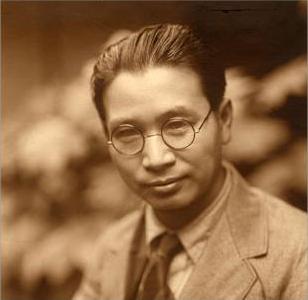
Toyohiko Kagawa

What follows is another installment in occasional biographies of influential people in cooperativism.


Toyohiko Kagawa (b. 7/10/1883, d. 4/23/1960) was one of five children. At the time of his birth his father was the secretary of the Privy Council to the Emperor of Japan. Kagawa’s mother was one of his father's two wives and was a professional dancing girl. His father was later made the governor of two provinces and vice-president of a third. Tragedy struck early in his life for when Kagawa was just four years old his father died. Kagawa was then adopted by his father's other wife. Though the family was wealthy and Kagawa lived in splendor his home was empty of love and according to Kagawa a living hell.

At the age of nine Kagawa was sent to a Christian convent for his education. When he entered high school he learned English from an American missionary, using the Sermon on the Mount. According to Kagawa it was Luke 12:27, "Consider the lilies, how they grow: they neither toil nor spin; but I tell you, not even Solomon in all his glory clothed himself like one of these”, that changed his life. It was due to this verse that he began to notice the beauty of the world and began to pray. He then realized that it was possible, in spite of the pressure of his peers, to live what he considered to be an ethical life.

After high school he entered a Christian college and later begun his ministry in Tokyo. Shortly after arriving he became seriously ill and rented for one yen a month a fisherman's cottage in the slums. The minister stayed with Kagawa for four days. It was then that Kagawa decided that to become healed he needed to begin ministering to the impoverished lower class of Tokyo.

Over time more men joined them to stay at the house. One was a convicted murderer, while another suffering from syphilis. Together the four men attempted to survive on just eleven yen. This tight budget meant eating only two meals a day. They would fill themselves up on water and thin their rice with water. Kagawa wrote, “If you have plenty of food you can never understand the meaning of the Lord's Prayer.”

Eventually Kagawa traveled to America and attended Princeton University. Once he graduated Kagawa went back to Japan. Rather than simply preach to the downtrodden he became a labor organizer. At one point he was arrested for participating in a general strike, which would be just one of many times he would be arrested for throughout his life. After his arrest Kagawa started organizing cooperatives throughout Japan, as well as organizing farmers into associations.

Eventually he moved on to organizing student cooperatives, consumer cooperatives, and credit unions. As World War II loomed on the horizon Kagawa shuttled back and forth between the US and Japan in a futile attempt to head off war. At one point the fascist government of Japan arrested Kagawa but later released him. Following the end of the war Kagawa traveled across the world to spread his message of cooperative economics. After his death in 1960 the Emperor of Japan awarded him their nation's highest honor, the Order of the Sacred Treasure.

In 1936 Kagawa wrote his landmark book Brotherhood Economics in which he presented his philosophy of change, theological framework for change, the history of the cooperative movement, and the direction of change that he advocated. In Kagawa’s model he proposed networks of cooperatives that would be organized into federations. The cooperatives within the federations would provide for health care, production, marketing and transport, credit, education, utilities, and distribution.

The cooperative federations would also send representatives to a Social Congress and an Industrial Congress. These congressional bodies would in turn send legislative proposals up to the legislative body. The Social Congress would send legislation on social issues while the Industrial Congress would send legislation on economic issues. Funds for their creation would be provided by the cooperative credit unions.

In Kagawa's model of Cooperative Commonwealth, he also kept small family enterprises and other private enterprises. Kagawa advocated setting caps on the private enterprises to prevent them from growing large and become a threat to the cooperative economy.

Certainly there are some differences between the model of economic democracy advocated here and Kagawa’s. Most importantly though, the core of his economic model, with its emphasis on cooperatives as economic enterprises along with the continuation of family enterprises, without a doubt places Kagawa well within the school of the economic democracy.