Sunday, June 13, 2010

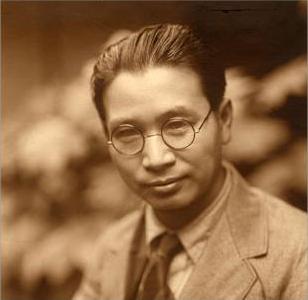
Toyohiko Kagawa

What follows is another installment in occasional biographies of influential people in cooperativism.


Toyohiko Kagawa (b. 7/10/1883, d. 4/23/1960) was one of five children. At the time of his birth his father was the secretary of the Privy Council to the Emperor of Japan. Kagawa’s mother was one of his father's two wives and was a professional dancing girl. His father was later made the governor of two provinces and vice-president of a third. Tragedy struck early in his life for when Kagawa was just four years old his father died. Kagawa was then adopted by his father's other wife. Though the family was wealthy and Kagawa lived in splendor his home was empty of love and according to Kagawa a living hell.

At the age of nine Kagawa was sent to a Christian convent for his education. When he entered high school he learned English from an American missionary, using the Sermon on the Mount. According to Kagawa it was Luke 12:27, "Consider the lilies, how they grow: they neither toil nor spin; but I tell you, not even Solomon in all his glory clothed himself like one of these”, that changed his life. It was due to this verse that he began to notice the beauty of the world and began to pray. He then realized that it was possible, in spite of the pressure of his peers, to live what he considered to be an ethical life.

After high school he entered a Christian college and later begun his ministry in Tokyo. Shortly after arriving he became seriously ill and rented for one yen a month a fisherman's cottage in the slums. The minister stayed with Kagawa for four days. It was then that Kagawa decided that to become healed he needed to begin ministering to the impoverished lower class of Tokyo.

Over time more men joined them to stay at the house. One was a convicted murderer, while another suffering from syphilis. Together the four men attempted to survive on just eleven yen. This tight budget meant eating only two meals a day. They would fill themselves up on water and thin their rice with water. Kagawa wrote, “If you have plenty of food you can never understand the meaning of the Lord's Prayer.”

Eventually Kagawa traveled to America and attended Princeton University. Once he graduated Kagawa went back to Japan. Rather than simply preach to the downtrodden he became a labor organizer. At one point he was arrested for participating in a general strike, which would be just one of many times he would be arrested for throughout his life. After his arrest Kagawa started organizing cooperatives throughout Japan, as well as organizing farmers into associations.

Eventually he moved on to organizing student cooperatives, consumer cooperatives, and credit unions. As World War II loomed on the horizon Kagawa shuttled back and forth between the US and Japan in a futile attempt to head off war. At one point the fascist government of Japan arrested Kagawa but later released him. Following the end of the war Kagawa traveled across the world to spread his message of cooperative economics. After his death in 1960 the Emperor of Japan awarded him their nation's highest honor, the Order of the Sacred Treasure.

In 1936 Kagawa wrote his landmark book Brotherhood Economics in which he presented his philosophy of change, theological framework for change, the history of the cooperative movement, and the direction of change that he advocated. In Kagawa’s model he proposed networks of cooperatives that would be organized into federations. The cooperatives within the federations would provide for health care, production, marketing and transport, credit, education, utilities, and distribution.

The cooperative federations would also send representatives to a Social Congress and an Industrial Congress. These congressional bodies would in turn send legislative proposals up to the legislative body. The Social Congress would send legislation on social issues while the Industrial Congress would send legislation on economic issues. Funds for their creation would be provided by the cooperative credit unions.

In Kagawa's model of Cooperative Commonwealth, he also kept small family enterprises and other private enterprises. Kagawa advocated setting caps on the private enterprises to prevent them from growing large and become a threat to the cooperative economy.

Certainly there are some differences between the model of economic democracy advocated here and Kagawa’s. Most importantly though, the core of his economic model, with its emphasis on cooperatives as economic enterprises along with the continuation of family enterprises, without a doubt places Kagawa well within the school of the economic democracy.

Sunday, May 30, 2010

A Story of EPIC Proportion

The year was 1934 and the world was in the grip of The Great Depression. America had recently elected FDR, a progressive Democrat, for President in the hopes that he could save the country. But one man offered something different. Something radical. His name was Upton Sinclair.

Sinclair wasn’t unknown. He had made a name for himself in 1906 by writing the landmark book, “The Jungle,” which revealed to the nation the atrocious conditions of the workers in the American meat packing industry and the horrendous quality of the food supply. The public was shocked and shortly after it was published Congress passed the Pure Food and Drug Act and the Meat Inspection Act.

Though he had previously run for President on the Socialist ticket in 1934 he was running for the Democratic Party to be the Governor of California. While FDR had the “New Deal” Sinclair offered California what he called “EPIC,” which stood for “End Poverty in California.” That year the highly popular magazine The Literary Digest ran a series of articles concerning, “outstanding issues of the forthcoming campaign and the fundamental problems confronting the country to-day.” Following is an excerpt from the October 13th, 1934 article written for the Digest by Sinclair in which he laid out a plan that contained many elements of what’s advocated for an economic democracy. You can read the whole article here.

The “EPIC” (End Poverty in California) movement proposes that our unemployed shall be put at productive labor, producing everything which they themselves consume and exchanging those goods among themselves by a method of barter, using warehouse receipts or labor certificates or whatever name you may choose to give to the paper employed. It asserts that the State must advance sufficient capital to give the unemployed access to good land and machinery, so that they may work and support themselves and thus take themselves off the backs of the taxpayers. The “EPIC” movement asserts that this will not hurt private industry, because the unemployed are no longer of any use to industry.

We plan a new cooperative system for the unemployed. Whether it will be permanent depends upon whether I am right in my belief about the permanent nature of the depression. If prosperity comes back the workers will drift back into private industry. No harm will have been done, because certainly the unemployed will produce something in the meantime, and the State will be that much to the good.

New Cooperative System
To meet the immediate emergency in our State and get the money to start our new cooperative system, we propose what we call an “EPIC” tax. That is an ad valorem tax on property assessed above $100,000, which means about $250,000 of actual value. This tax will fall almost entirely upon our great corporations and utilities, and to make it easier for them we shall make it payable at the option of the State, in goods and services. That will give us most of the raw materials and all of the utility services which the unemployed will need to get production started.

We have a great irrigation and power project known as the Central Valley Project. We propose to send fifty thousand unemployed into this work and ask the farmers of the Central Valleys to bring their surplus food crops, taking credits which will be good for water and power when the project is completed. The “EPIC” tax will give us the needed lumber, cement, rock and gravel, steel, etc., and light, heat, power, and transportation. The project will be carried out by our Public Works Department, and it will bring industry back to life in California.

Sunday, May 9, 2010

Of Noise and Profits

Not often a topic just drops in my lap right before my bi-weekly blog. You’re probably thinking, “Of course, he’s gonna write about the BP offshore oil well explosion and the dangers of Big Oil.” If that’s what you were thinking, well, you’re mistaken for that’s not the subject this time.

Thanks to Yahoo.com I learned of a recent article titled “How Restaurants Get You Drunk”, posted on the web site The Daily Beast, in which the author of the book “In Pursuit of Silence,” George Prochnik, explored the reasons behind the current trend in restaurants to louder and louder settings.

In his article he noted several recent studies. In one study that was done by Fairfield University it was found that the rate that people chew their food increased as the tempo of the music being played increased. The researchers found that by raising the tempo of the music it increased the rate of chewing from 3.83 bites a minute to 4.4 bites a minute. Corporate restaurant industry certainly took note of the study. According to Prochnik the corporate restaurant chain Dick Clark American Bandstand, “developed computerized sound systems that were preset to raise the tempo and volume of music at hours of the day when corporate wanted to turn tables.”

Prochnik also referenced another study, this time done by French researchers, which found that by raising the sound level of the music being played caused a corresponding increase in the number of drinks ordered. At 72 decibels the average number of drinks was 1 every 14.51 minutes. By cranking up the decibels to 88 the number of drinks went up to 1 every 11.47 minutes.

The goal of all of this should be obvious. Increasing the tempo and beat of the music isn’t done to increase for the enjoyment experienced by the customers. The corporate goal in this is the same as it always is. Manipulating the music played is done with the goal of a corresponding increase in sales. An increase in sales means an increase in profits, which are funneled into the pockets of shareholders in the form of dividends. In addition, profitable businesses usually, though not always, translate into increases in the value of shares.

Sunday, April 25, 2010

US Steelworkers and Worker-Owned Co-ops

Contrary to the claims of many, most unions (at least in the last 50 years) aren’t anti-capitalist. They’re more than happy to always be what one might call the "loyal opposition." As long as they’re outsiders they can rant and rave against management while always sounding pro-worker but never, ever, sounding like they opposed capitalism. Most unions are been quick to disavow any idea that the workers themselves should own and manage the shops and factories. The majority of unions are content with negotiating for better pay and more benefits. Sure, there are a few, like the International Workers of the World (IWW), that go beyond but they’re the exception and not the rule.

Finally, there now seems to be a change for one union.

In October of 2009 the United Steelworkers Union announced they were collaborating with the Mondragon Cooperative Corporation (MCC) of Spain to explore increasing the number of worker-owned cooperatives here in the US.
According to the USW International President Leo W. Gerard, “We see today's agreement as a historic first step towards making union co-ops a viable business model that can create good jobs, empower workers, and support communities in the United States and Canada.” He went on to say, “Too often we have seen Wall Street hollow out companies by draining their cash and assets and hollowing out communities by shedding jobs and shuttering plants. We need a new business model that invests in workers and invests in communities.”
(Source: SolidarityEconomy.Org)

The MCC President of Mondragron Internacional, Josu Ugarte, stated: “What we are announcing today represents a historic first--combining the world's largest industrial worker cooperative with one of the world's most progressive and forward-thinking manufacturing unions to work together so that our combined know-how and complimentary visions can transform manufacturing practices in North America. We feel inspired to take this step based on our common set of values with the Steelworkers who have proved time and again that the future belongs to those who connect vision and values to people and put all three first.”

There’s simply no way to predict what will come out of this collaboration. As I mentioned in my blog entry of March 30th there is also the Cleveland Model in which several cooperatives haven been formed. One can hope that maybe, just maybe, that collaboration between MCC and the USW along with the Cleveland Model are examples that the dream of an economic democracy is starting to become more than just a dream.

Sunday, April 11, 2010

2012

“The end of the world as we know it and I feel fine.” R.E.M.

Forget all the reports about the world coming to an end in 2012. What everyone should be taking note of is that back on December 21, 2009 the UN declared 2012 to be “The International Year of Cooperatives.”

NEW YORK, 21 December (Department of Economic and Social Affairs) -- The United Nations General Assembly has declared 2012 as the International Year of Cooperatives, highlighting the contribution of cooperatives to socio-economic development. In adopting resolution 64/136 on 18 December, the Assembly noted that cooperatives impact poverty reduction, employment generation and social integration.

A cooperative is an autonomous voluntary association of people who unite to meet common economic, social and cultural needs and aspirations, through a jointly owned and democratically controlled enterprise. In general, they contribute to socio-economic development.

As self-help organizations that meet the needs of their members, cooperatives assist in generating employment and incomes throughout local communities. Cooperatives provide opportunities for social inclusion. In the informal economy, workers have formed shared service cooperatives and associations to assist in their self-employment. In rural areas, savings and credit cooperatives provide access to banking services that are lacking in many communities and finance the formation of small and micro businesses, promotes inclusive finance.

The cooperative sector worldwide has about 800 million members in over 100 countries and is estimated to account for more than 100 million jobs around the world. The strength and reach of cooperatives are illustrated in the following examples:

* Under the umbrella of the World Council of Credit Unions, 49,000 credit unions serve 177 million members in 96 countries, and 4,200 banks under the European Association of Cooperative Banks serve 149 million clients;

* Agricultural cooperatives account for 80 to 99 per cent of milk production in Norway, New Zealand and the United States; 71 per cent of fishery production in the Republic of Korea; and 40 per cent of agriculture in Brazil;

* Electric cooperatives play a key role in rural areas. In Bangladesh, rural electric cooperatives serve 28 million people. In the United States, 900 rural electric cooperatives serve 37 million people and own almost half of the electric distribution lines in the country.

International Years are declared by the United Nations to draw attention to major issues and encourage action. To commemorate the Year, regional conferences will raise awareness of cooperatives and seek ways to leverage their contribution to socio-economic development and foster regulatory frameworks. A research agenda will be proposed and Member States are to form national committees that will serve as focal points for the Year’s activities.

http://www.un.org/News/Press/docs/2009/dev2784.doc.htm

Leaving aside how generally impotent the UN is at achieving its goals one can’t help but hope that their declaration is a premonition of something great to come.

Tuesday, March 30, 2010

The Cleveland Model

Due to my health problems this entry is shorter than I had hoped. I apologize to my readers for its brevity.

There’s something exciting happening in the Buckeye State. While most of the corporate media is fixated on the crass politics going on in Congress there are some events taking place in the American heartland that are important in the movement towards creating an economic democracy. The few articles that are appearing in the media, while brief, are providing glimpses into these exciting developments.

The Evergreen Cooperative Initiative of Cleveland, Ohio is actively creating worker-owned cooperatives based on the Mondragon Cooperative. According to an article in Time Magazine this Initiative, which has been dubbed the Cleveland Model, the Evergreen Cooperative Development Fund provides to co-ops, “low-interest, long term financing. In the future, a financial institution more aligned with the Caja Laboral, which also handles consumer savings and lending, might be developed.”
(Source: Time Magazine)

Several of the cooperatives started by the Evergreen Cooperative Initiative are getting special attention in the press. The one that gets the most coverage is the Evergreen Cooperative Laundry, which specializes in providing laundry service for the healthcare industry of Cleveland. Another co-op that’s received interest by the press is the Ohio Cooperative Solar (OCS) which specializes in installing large-scale solar panels. According to the Nation the Initiative isn’t stopping with just these two co-ops. It’s creating other co-ops in the Cleveland area such as the Green City Growers (which has a hydroponic garden that’s larger than a Wal-Mart superstore) and a community newspaper “Neighborhood Voice,” which will start printing later this year. (Source: The Nation)


The Cleveland Model is using the principles of Economic Democracy to solve one of the serious problems for starting co-ops, which has been access to investment. The Nation goes on the report that, “each of the Evergreen co-operatives is obligated to pay 10 percent of its pre-tax profits back into the fund to help seed the development of new jobs through additional co-ops. Thus, each business has a commitment to its workers (through living-wage jobs, affordable health benefits and asset accumulation) and to the general community (by creating businesses that can provide stability to neighborhoods).”

Another important feature of this is that it’s occurring from the grassroots level. Historically every change in any mode of production has originated from the bottom up rather than the top down. The potential for the Cleveland Model to be the start of a movement that could someday threaten capitalism is amazing.

Without a doubt the events in Cleveland are fantastic. Yet the Evergreen Cooperative Initiative is just one of several developments that are appearing not only in America but on the international scene. In the future I plan to draw attention to some of the other important developments.

For more information Evergreen Cooperative Laundry, Ohio Cooperative Solar and Green City Growers all share a web site: http://www.evergreencoop.com/

Sunday, March 14, 2010

The Importance of Nonviolence

“Nonviolence is the answer to the crucial political and moral questions of our time- the need for people to overcome oppression…Nonviolence is not sterile passivity but a powerful moral force which makes for social transformation”- Dr. Martin Luther King Jr.

In recent postings I attempted to define what capitalism is. Most of my previous postings consisted of laying out arguments for what I believe to be a system that would be far better than capitalism: economic democracy. An important issue that needs to be addressed at this time is a detail about changing the system: the necessity of nonviolence.

First, it’s delusional to think that it’s possible to change America through violence. Joseph Stack’s attack on an IRS building in Austin, Texas was a nothing more than cowardly act of evil. All it did was terrorize the hard working government employees in the building and murdering an American hero, Vernon Hunter, 67, who was laid to rest with full military honors.

Even if there was a remote possibility, which there isn’t, of success by such means what would a change by violence show from an ethical standpoint? Do we really want a system changed by violent means? Benjamin Franklin wrote, “Whatever is begun in anger ends in shame.”

Then there is a purely patriotic reason. Rev Norman Thomas once said, “If you want a symbolic gesture, don't burn the flag; wash it." The drive to change America from a capitalist system to an economic democracy should come from a sense of true patriotism in which, out of love, we hope to “wash” our nation of the wrongs that exist rather than burn it.

It’s also important that as we write and discuss concepts such as class, and toss around terms such as “capitalists” or “workers”, that we avoid demonizing any one person or group of people. In all socio-economic classes there are individuals who are morally good and morally bad. Being a laborer doesn’t make one a saint nor does being a capitalist make one a villain. We need to emphasis that it’s the degrading and dehumanizing system of creating dominating relationships based on capital and the private control of marketable wealth that we strive against and not the individuals within the system. If we begin to demonize people then we run the risk of creating “The Other”, which often leads to violence.

A brief comment is needed here about the efficacy of nonviolent methods. Some, especially on the radical Left, claim that nonviolence is weak and ineffective. They point to all of the past changes in the modes of production and that they all were the result of violent means. What they fail to consider is that all of the prior changes occurred prior to the development of the modern democratic state. It’s the power of parliamentary, democratic institutions that has since shown to be the key to a modern peaceful transition.

On a summer day in 1963, standing on the steps of the Lincoln Memorial, Dr King said, “In the process of gaining our rightful place, we must not be guilty of wrongful deeds. Let us not seek to satisfy our thirst for freedom by drinking from the cup of bitterness and hatred. We must forever conduct our struggle on the high plane of dignity and discipline.” The only choice available to us is a dedication to the use of peaceful, democratic, and parliamentary procedures. We won’t give up our right to protest and publicly demand change but our chosen means will be peaceful. We owe this to our ancestors, to our descendants, and to the nation that we love.